Dear incoming biology student,
Hello! I am Michael Tang, a current freshman who has finished my year of Biology. As a student, I strive to excel in the subjects I like and also branch out into other areas of study, taking electives in Spanish language and computer science, and participating in extracurricular activities like piano and golf. I value quality and balance, preferring to hone my skills in a few specific areas while maintaining a broad balance across all the topics I am exposed to. To me, biology specifically is an intriguing subject; I have always felt drawn toward the unique processes and mechanisms it introduces, as well as its endless applications and explanations that keep it perpetually both relevant and interesting.
Like you probably are, I was somewhat unsure on the first day of the expectations and workflow that Mr. Orre's class would bring. However, I soon learned that the class would be unlike most other classes I had previously taken: the course implements a "flipped classroom" model, which allows more flexible learning and more labs and activities. I definitely believe this is advantageous, and although it did mean more work to do for homework, the benefits significantly outweighed the costs. For example, the format allows additional class discussion on the lecture topics, as there is usually some time during the beginning of each class where we discuss the more complex aspects of the material. This normally follows a "Do Now," a warm-up of sorts involving an individual write-up answering some presented question related to the material. The bulk of class time is often used for different activities like watching videos, working on projects, or doing labs. In addition, we keep a biology blog over the course of the year (this letter is posted on mine), where we post unit reflections, lab write-ups, and similar content. Writing posts is sometimes part of the homework, though the homework usually consists of taking notes on vodcasts and working on textbook notes that are due at the end of each unit. These notes (on vodcasts and textbooks), as well as the "Do Nows" are written and kept in a notebook; as time passes, your notebook will slowly evolve into an essential study tool and resource, so make sure you maintain and organize it! Overall, the year is definitely packed with engaging topics, from cellular biology to molecular biology, from ecology to evolution to genetics. I learned a profusion of knowledge from the class, as I am sure you will, and even garnered some "soft skills" relating to time management, organization, and (fast and efficient) note-taking.
I am sure you can apply most of your general "study skills" and similar school knowledge to get the most out of this class, although make sure to keep up with deadlines and coursework. Due to the "flipped classroom" model, the homework becomes especially important, so do not neglect it! It is responsible for teaching you the concepts (though they are generally reviewed during class) and bequeathing most of the information, and also accounts for a significant portion of your grade. To prepare for tests, make sure to review your vodcast notes and summaries, as virtually all of the test material is based on it. (although occasionally knowing some textbook or outside information can prove essential) Another large part of the class (and your grade) is labs, and writing effective analyses is important. Additionally, make sure to follow all of Mr. Orre's directions during a lab, especially during clean-up, as he is very particular about lab performance, and not following directions is one of his largest pet peeves.
In conclusion, this class is a whirlwind of information and learning, though a whirlwind full of memorable experiences for me. It was one of my most enjoyable classes this year, and I also learned a great deal; next year I will be taking Chemistry Honors, and I hope to find a similar experience waiting there. I am sure you will take interest in this class just as I did, through the numerous blog reflections, vodcasts, and topics. All in all, good luck on your journey, and take care!
Best regards,
Michael Tang
Friday, June 2, 2017

Tuesday, May 30, 2017
Pig Dissection Lab
In the pig dissection lab, we explored the different organs and processes in the body of a fetal pig and connected them to how the human body functions. We asked the essential question of "how can we see the workings of the human body systems in the pig?"; in the dissection, we found organs of the digestive, respiratory, circulatory, urinary, reproductive, and endocrine systems. These included the trachea and esophagus in the pig's throat; the pig's pancreas, gallbladder, liver, stomach, and intestines; and endocrine glands like the thyroid gland and the spleen. Furthermore, we recorded (and I edited) a video highlighting and explaining various organs in the pig. Watch the video below or here.
The most interesting part of the dissection was identifying the different organs, as it was surprising how good of a representative the pig was for a human body; also, it helped bring to life the concepts we learned in the vodcasts, such as seeing the path the food might go through inside the pig's digestive tract or observing the blood vessels that connect the heart to the different parts of the body.
In addition, the dissection itself was a valuable experience, as it was quite a different and unique lab. The careful taking apart and cutting open of the pig was unlike any lab we had done before, and working with a once-living organism was an interesting experience, though it did not pose any major obstacles with me or my group members. Overall, it was an enjoyable and educational experience (that I might repeat if I take A&P or a similar course later on) and provided a new and much-needed perspective on the unit material.
In addition, the dissection itself was a valuable experience, as it was quite a different and unique lab. The careful taking apart and cutting open of the pig was unlike any lab we had done before, and working with a once-living organism was an interesting experience, though it did not pose any major obstacles with me or my group members. Overall, it was an enjoyable and educational experience (that I might repeat if I take A&P or a similar course later on) and provided a new and much-needed perspective on the unit material.
Thursday, May 11, 2017
Unit 9 Reflection
This unit was a whirlwind of different taxa, from the simple cell colonies of Porifera to the modern Mammalia. It covered many different kingdoms, phyla, and classes, organized in accordance with Linneas's binomial nomenclature system in different levels of organization.
The 3 domains are Bacteria, Archaea, and Eukarya. Bacteria are single-celled prokaryotes with flagella and cell walls made of peptidoglycan; they are somewhat comparable to the non-living viruses, which have capsids with DNA or RNA, and infect by taking control of cell machinery. The mysterious archaea domain are extremophiles and are difficult to compare with other taxa, a domain once thought to be part of Bacteria.
In the domain Eukarya, some kingdoms include Plantae and Fungi, which have cell walls made of cellulose or chitin and have unique characteristics that help them survive in different environments. Our own kingdom, Animalia, is made up of phyla like Porifera, the sponges, and Cnidaria, the radially symmetrical polyps and medusas. Other phyla show the evolution of the digestive system, from the incomplete guts of Platyhelminthes, to the complete digestive tracts of Mollusca, to the coeloms of Annelida. The most common invertebrates are Arthropoda, which have segmented bodies with appendages, made up of a head, thorax (or cephalothorax), and abdomen). Of course, the phylum Chordata is one of the most advanced, featuring amniotic sacs and eggs, as well as a notochord and other embryonic features. The classes of Chordata go from the earliest fish (Agnatha, Chondrichthyes, Osteichthyes) to the first terrestrial vertebrates (Amphibia, Reptilia). From the dinosaurs evolved the phylum Aves, which had hollow bones, feathers, and fused collarbones to allow for flight. Of course, the phylum Mammalia eventually developed, composed of active endotherms including monotremes, marsupials, and eutherians (like us!).
In general, this unit was deeply satisfying to explore, as it covered one of my favorite topics in biology. The web of life is so infinitely complex, and its connections and history open our eyes to how everything, no matter how different, is so intricately linked. As deep as we have delved, I still have a plethora of questions brimming in my mind, from how anatomy and skeletal structures evolved, to the geological shifts that have facilitated the adaptation of these organisms. (learn more about Earth's history in my 20 Time here!) How did complex adaptations like the eye and the wing form? What were the intermediate structures, and what role did they play in the evolution of the taxa that possessed them? What were the key factors in coevolution and symbiosis, and in what cases was it thwarted by some other factors? Hopefully, my future academic endeavors will bring me answers to those questions, and beyond.
In this unit, we completed the "What on Earth Evolved?" project, each exploring a specific species or group of organisms, in order to introduce various influential organisms in Earth's history. (we explored the history of the Earth in this project) I was given the task of researching stony corals, and I created (and presented) the above presentation. Take a look at the presentation above: corals are fascinating both internally and externally, and I gained quite a bounty of knowledge from this project. Additionally, I was able to practice designing a balanced presentation, and I improved my slide-making skills, juxtaposing images with researched information. I also learned how to embed the presentation into this blog, a skill I might find useful in the future. Ultimately, I was surprised at the ease with which I could convey my ideas to the class, which goes to show how important the practice I did was. In the future, however, I might try to enlarge the font to make the slides easier to read, and also research some additional background information in order to be able to better answer people's questions.
All in all, this unit provided a very rewarding and eye-opening experience, and I look forward the next (and last) unit of Biology, which should provide a close-up perspective of the human body systems, in contrast with the "wide-lens" taxonomy we have been studying in this past unit.
 |
| Levels of organization |
In the domain Eukarya, some kingdoms include Plantae and Fungi, which have cell walls made of cellulose or chitin and have unique characteristics that help them survive in different environments. Our own kingdom, Animalia, is made up of phyla like Porifera, the sponges, and Cnidaria, the radially symmetrical polyps and medusas. Other phyla show the evolution of the digestive system, from the incomplete guts of Platyhelminthes, to the complete digestive tracts of Mollusca, to the coeloms of Annelida. The most common invertebrates are Arthropoda, which have segmented bodies with appendages, made up of a head, thorax (or cephalothorax), and abdomen). Of course, the phylum Chordata is one of the most advanced, featuring amniotic sacs and eggs, as well as a notochord and other embryonic features. The classes of Chordata go from the earliest fish (Agnatha, Chondrichthyes, Osteichthyes) to the first terrestrial vertebrates (Amphibia, Reptilia). From the dinosaurs evolved the phylum Aves, which had hollow bones, feathers, and fused collarbones to allow for flight. Of course, the phylum Mammalia eventually developed, composed of active endotherms including monotremes, marsupials, and eutherians (like us!).
 |
| A circular diagram of the tree of life |
All in all, this unit provided a very rewarding and eye-opening experience, and I look forward the next (and last) unit of Biology, which should provide a close-up perspective of the human body systems, in contrast with the "wide-lens" taxonomy we have been studying in this past unit.
Thursday, April 20, 2017
Geologic Timeline Reflection
This unit, I worked in a group and created a geologic timeline of the history of the Earth. The timeline gave a sense of the magnitude and major events of the past, as well as how insignificant of a time we humans have occupied. I have organized some thoughts below as a sort of reflection on the project and what we learned.
In the Earth's history, some significant events were the oxygen revolution, Cambrian explosion, and K-T extinction. The oxygen revolution, which occurred in the Proterozoic Eon, had a lasting and important impact on the Earth. Scientists have found that there was a radical increase in oxygen levels due to the photosynthetic actions of cyanobacteria; it has been estimated that the amount of oxygen went from 1% to 15% of current levels, and changed. Thus, this event affected the future of the Earth and made possible the proliferation of oxygen-respiring organisms afterward. The Cambrian explosion was also one of the most important events: it consisted of a burst of immense evolution and diversification that took place in an "explosion." The organisms arose in a mere 30 million years, and began many of the lineages that persisted for millennia, and that we see today. This was the cause of the development of both terrestrial flora and fauna, but also the marine life of the Ordovician and Devonian Periods. Lastly, the K-T extinction was highly influential to the development of the following Cenozoic Era. It saw the extinction of all dinosaurs and many other species, and allowed the adaptive radiation of the unaffected species and organisms, such as mammals. Thus, it made possible much of what exists today, including our own species, that would otherwise not have risen to such a degree.
The scale of Earth's history is simply colossal, what with our own written and evolutionary history not even a blink of an eye in the planet. Though I had some idea of this comparison, especially as I had researched the topic as part of my 20 Time project, I was unaware of the vast difference of the eons and epochs. That said, we have had a surprising impact on the planet during our relatively short time here: we have changed the climate, the temperature, the geography, the topography; we have decimated many species, and allowed others to become widespread to further our own ends; we have spread and sought in space, and plumbed the deepest trenches of the Earth. As much as we have learned, we have destroyed, and there is no question that we will continue to do so. Perhaps through this, we are our own demise; just another species that formed, thrived, and died out as it made way for others to dominate. Are we just another Dinosauria? In all the ways we think ourselves superior, certain adaptations bequeathed similar advantages upon other species of the past. Flight, camouflage, speed, different senses: they all shone through and thrived, though the species changed and diverged. Are we different from all that came before us? What will come after us? Will we ever know? Perhaps not. But that is, inherently, our advantage: the unceasing yearning to know, to learn, to grow.
 |
| Mesozoic Era and the K-T extinction |
 |
| Cenozoic Era and the blink of an eye that is us |
Wednesday, April 12, 2017
Unit 8 Reflection
In this unit, we learned about evolution and its related processes and patterns. Evolution is a theory supported by numerous sources of evidence, such as analogous structures, where different species develop the same structures in different ways due to its benefits; developmental evidence, which can show processes shared in common by related species; homologous structures, which can show structures that have been adapted differently by diverging species; and fossils, which form a fossil record that can be used to track evolution across time. Evolution is mostly dependent on natural selection, though it is also affected by genetic drift, random changes in the population; gene flow, the movement of alleles; mutations, which influence and are acted on by natural selection; and sexual selection, a similar process involving selection for traits advantageous for mating success.
Like artificial selection, a process involving breeding a population for certain traits favored by humans, natural selection is a change in allele frequency in a population over generations. It occurs due to survival benefits certain traits give individuals. In addition, though the gene pool changes continuously over time due to natural selection, lethal alleles can remain as recessive alleles that may be influential in the event of changing conditions.
As the population changes, patterns such as stabilizing selection, directional selection, and disruptive selections can appear. These relate to how different phenotypes become more less common, favoring an extreme, the intermediate, or both extremes. Disruptive selection is also a cause of speciation. Speciation occurs as new species rise due to behavioral, geographical, or temporal isolation. This can occur continuously, through gradualism, or in uneven stretches, as in punctuated equilibrium.
In a nutshell, this unit has been a whirlwind of ideas that tie in old concepts and new ones alike. (e.g. genetics, inheritance, populations) It has given many answers, though questions do not equally abound. For example, the information about homologous structures and fossils provoked questions about how these fossils actually change, and what genes control them. Partaking in the Hunger Games lab was particularly interesting, as it demonstrated real-time (or sped-up time really) how different factors play into the change in a population. Even the unexpected outcome still showed how genetic drift and new behaviors can affect what happens.Additionally, the vodcast on the history of life makes one wonder what exactly occurred that changed things so much. (go to my 20 time project to learn more!)
In the last unit reflection, I made it a goal to more assertive, after exploring some of the different conflict styles. (e.g. passive, aggressive, assertive) Since then, I have put some effort into that goal, trying to put out a clearer opinion during group projects and, to some extent, in my life. For example, during a PE project, I made sure to maintain my priorities and to ensure we finished on time by keeping the group on schedule. I will continue to work toward this goal in the coming weeks, and I hope to be successful.
All in all, I am looking forward to the next unit, and learning more about......kingdoms and phyla? That proves to be an adventure, and we shall see what it holds.
 |
| Result of artificial selection in carrots |
As the population changes, patterns such as stabilizing selection, directional selection, and disruptive selections can appear. These relate to how different phenotypes become more less common, favoring an extreme, the intermediate, or both extremes. Disruptive selection is also a cause of speciation. Speciation occurs as new species rise due to behavioral, geographical, or temporal isolation. This can occur continuously, through gradualism, or in uneven stretches, as in punctuated equilibrium.
 |
| Allele frequency change over time in Hunger Games lab |
In the last unit reflection, I made it a goal to more assertive, after exploring some of the different conflict styles. (e.g. passive, aggressive, assertive) Since then, I have put some effort into that goal, trying to put out a clearer opinion during group projects and, to some extent, in my life. For example, during a PE project, I made sure to maintain my priorities and to ensure we finished on time by keeping the group on schedule. I will continue to work toward this goal in the coming weeks, and I hope to be successful.
All in all, I am looking forward to the next unit, and learning more about......kingdoms and phyla? That proves to be an adventure, and we shall see what it holds.
Friday, March 31, 2017
Hunger Games Lab
- In this lab, we simulated real-life natural selection patterns through an experiment involving picking up food (corks) in various ways based on three different phenotypes: stumpies (AA), knucklers (Aa), and pinchers (aa).

Lab overview and procedure - Knucklers and pinchers were the best at catching food, as knuckles or fingers were better for picking up food, and thus survived the most. The small a allele increasing significantly in frequency supported this, going from 50% of the gene pool to 0.74% of the gene pool in round 5.
- In our experiment, our population evolved, as the allele frequencies shifted significantly due to differences in individual phenotypes. The frequencies of the large A and small a alleles went from 0.5 and 0.5 to 0.38 and 0.62 over the course of the experiment. In addition, at the end of the experiment, there were 14 knucklers, 6 pinchers, and 1 stumpy from the 10-10-10 makeup of the beginning; all of the data points to a gradual shift in the gene pool of the population.
- Much of the changes in this experiment were due to non-random factors (e.g. natural selection). However, random events also impacted the experiment; genetic drift caused by changes in the food dispersion, as well as cheating to survive both affected the data. When the food was gathered in piles near some individuals, they were able to collect more food and thus survive and reproduce better. Additionally, some individuals resorted to cheating (i.e. grabbing technique) when selective pressures were high, and thus had an advantage unrelated to their traits.
- In nature, when resources and conditions change, individuals and populations are affected: adaptations come into effect, and some individuals die out as a result of being unfit for the new conditions. For example, if an invasive species were to be introduced into the area, it might kill off or compete with the population, thus causing fewer individuals to survive. Similarly, the results of the lab may have been different if some key factors were changed. If the food was larger, the stumpies may have fared better, with an easier time picking up the food. On the other hand, if the food was smaller, it might benefit the pinchers, as they have an advantage picking up smaller food over the other phenotypes.
- If there were not incomplete dominance, then there would be many more stumpies (making up 75% of the potential genotypes from a double heterozygous cross), as they are a result of the dominant big A allele. Conversely, without the knuckler phenotype, the pinchers would quickly outcompete the stumpies and dominate the population.
- In this lab, we saw how natural selection is a major driving force of evolution, as it changes populations to make traits beneficial for survival more common over generations. Our beneficial allele was the small a allele, as pinchers and knucklers were better at surviving, so over time that allele became increasingly prevalent. Therefore, there were more pinchers and knucklers at the end.
- Individuals adopted new techniques during the experiment. When selective pressures were high, they often cheated with a grabbing technique to increase their chances of survival. This likely led to there being more individuals with inferior phenotypes (i.e. more stumpies survived). Thus, it would have also increased the frequency of large A alleles. In nature, adaptations over time would play a similar role, beneficial mutations leading some to survive while others died off. An example would be the peppered moth: the black phenotype let the moth better camouflage from predators during the Industrial Revolution, and thus individuals with that phenotype had an advantage.
- Natural selection acts on populations over many generations, and occurs due to beneficial traits of individuals. This can be seen in this lab: the beneficial traits that pinchers and knucklers had to pick up food caused their genes to be passed on more often (survived more often), and thus the population's gene pool was affected.

 |
| Graph of allele frequency over time in experiment |
Wednesday, March 8, 2017
Unit 7 Reflection
This unit was a tour in the essential "study of house," a branch of biology that grows in importance every day due to the numerous causes of damage to the environment. Ecology can be studied on many levels, from the smallest niches, full of factors and adaptations species need to survive; to complex food webs, structures linking hundreds or even thousands of producers and consumers of every trophic level, transferring less and less energy until apex predators get close to none; to entire ecosystems, rich with different organisms and the abiotic factors that affect their lives, as well as cycles of the nutrients they need; to the biosphere itself, extending worldwide and encompassing all life on earth.
Likely the most directly linked topic to humans is human population, which, like populations of any animal, is affected by factors such as immigration, disease, density, and dispersion. Like any population in its initial stages, the human population is also growing exponentially, though the carrying capacity of the earth can only support about 10-15 billion in total.
One of the largest concerns currently is humans' effect on the planet. Through climate change, overexploitation, and introduced species, and habitat loss, we have created the sixth mass extinction, and have endangered a large percentage of all species. Unless we work as individuals and a society to conserve and restore resources and save biodiversity, the world as we know it will surcease.
This unit has indeed left me with some unanswered questions, such has how exactly our harmful, as well as restorative, processes work. (e.g. power plant and engine emission chemistry, properties of plastics and recycling for different plastics) A further exploration into basic economics and manufacturing could also help me broaden my knowledge, as would knowing more about the largest threats to the environment. What are the main causes of introduced species in the modern world? What industries and specific techniques should be targeted to reduce habitat loss and overexploitation?
Much of the time we spent in this unit was working on a Conservation Biologist Project. In my group, we worked to create an effective presentation (see above) covering the environment and threats of the Ecuador cloud forests, as well as attempting to formulate solutions directed at these threats. Most of the time, we worked together well as a group, fulfilling group goals and individual tasks on schedule, and we were equally successful with our research. It was a bit difficult to coordinate large tasks as a group, such as putting together the works cited and getting the individual recordings done for editing, but in the end we were able to keep everyone, for the most part, on schedule, and wrapped up the work on time. If I were to do a similar project in the future, I would probably be more specific and break down goals. Furthermore, I would try to enforce goal deadlines better so that group members finished tasks on time without fail.
A concept we learned was the different conflict management types: assertive, passive, aggressive, and passive-aggressive. After taking a self-assessment on the topic, I determined that my leading types were assertive (35%) and passive (27%); my goal is to be more assertive, which would entail being more clear and straightforward with my ideas, as well as keeping my priorities in mind as I communicate.
In general, I look forward to learning more in the realm in biology, whatever it may be. On a side note, I will also work toward improving my writing, whether it be in biology reflections, or in any number of other applications.
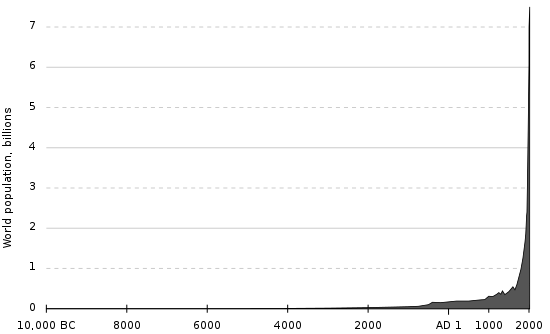 |
| Human population growth diagram |
Likely the most directly linked topic to humans is human population, which, like populations of any animal, is affected by factors such as immigration, disease, density, and dispersion. Like any population in its initial stages, the human population is also growing exponentially, though the carrying capacity of the earth can only support about 10-15 billion in total.
One of the largest concerns currently is humans' effect on the planet. Through climate change, overexploitation, and introduced species, and habitat loss, we have created the sixth mass extinction, and have endangered a large percentage of all species. Unless we work as individuals and a society to conserve and restore resources and save biodiversity, the world as we know it will surcease.
 |
| Ball-and-stick model for polyethylene terephthalate (PET) |
A concept we learned was the different conflict management types: assertive, passive, aggressive, and passive-aggressive. After taking a self-assessment on the topic, I determined that my leading types were assertive (35%) and passive (27%); my goal is to be more assertive, which would entail being more clear and straightforward with my ideas, as well as keeping my priorities in mind as I communicate.
In general, I look forward to learning more in the realm in biology, whatever it may be. On a side note, I will also work toward improving my writing, whether it be in biology reflections, or in any number of other applications.
Wednesday, February 1, 2017
Unit 6 Reflection
This unit was one that saw the beginning of biology being tied in with real life: biotechnology is the application of biology in a wide range of fields, from gene therapy to transgenic organisms to fermentation. The different branches of biotechnology are industrial and environmental, agricultural, medical and pharmaceutical, and diagnostic research; furthermore, they involve techniques to manipulate inheritance and DNA.
PCR is a fundamental procedure: a denatured template strand has primers annealed to it, and then DNA polymerase is used to extend the primers in several cycles. Soon, millions of copies of the strand of DNA can be produced. This DNA can be analyzed and sequenced through gel electrophoresis: the setup of electrodes around a gel box with different DNA samples causes shorter DNA strands to move faster through the pores of agarose gel, pulled by the backbone's negative charge. In order to test the composition of various dyes found in candy, we used this process in the gel electrophoresis lab. The test allowed us to see how the chemical structure of different dyes made them run differently in the gel, and how different dyes were sometimes mixed to produce a wider variety of colors.
In addition, fluorescent dyes can be attached to increasingly longer copies in a PCR reaction to yield a sequence of different dyes that correlate with base pairs. After gel electrophoresis, the base pairs can be analyzed, and an electropherogram can be produced. Another technique involve creating transgenic organisms using restriction enzymes and ligase. The enzyme cuts the strand at a restriction site, creating sticky ends, and the spliced piece is attached to another strand using ligase. We were exposed to the results of this technique in the pGLO lab, in which we introduced engineered plasmids into bacteria to make them produce GFP and glow in black light. A setback here was that due to imprecision at some point in our experiment (see the page for more detail), our plasmids were unable to become integrated into our bacteria, rendering the end result a failure. Nevertheless, as we witnessed the success of other groups, it showed how revolutionary this technology was, in changing the very DNA of bacteria to make it undergo different processes.
However, these extensive processes allow humans to manipulate organisms and inheritance in an unprecedented, highly intrusive manner. Bioethics is a specific branch of biology dedicated to determining the ethics of using new technologies based on values and morals. The questions posed are endless, and include dilemmas such as if stem cells from embryos should be used to treat diseases, as well as if life should be extended and human capabilities enhanced.
Overall, the unit was very unique in that it expanded from the usual biological theory and introduced tangible applications of manipulating biological molecules and processes. An observation I might make about my performance in this unit, in comparison with previous ones, is that as the procedures grew more complex, I felt more detached and intimidated by all of the advanced techniques involved. However, it was truly the labs that brought me back to the reality of how it could be done easily, even with limited equipment. Rather than being lost in the causes and effects of how everything worked, I became more concerned with the actual organisms and molecules we analyzed and worked with. I believe this really is what sets this unit apart from all of the others (so far), and what at the same time tied everything together.
To check back on my goals from the new year, I would say I have improved at least somewhat in better connecting the different subjects in summaries (relate and reviews, textbook notes, reflection, etc.) and in my mind. Perhaps it is the unit topic, but I can now more coherently visualize what processes and concepts affect one another. In the coming unit(s), I will also try to follow up on my goal of finding further information on each topic to broaden my understanding; of course, I will also continue to make more connections in writing and otherwise. In general, I look forward to either returning to the comfortable world of abstract mechanisms and learning more about the natural processes on Earth (ecology perhaps?), or wandering further in this new frontier of applied technology.
 |
| Agar plate for use in DNA transformation |
PCR is a fundamental procedure: a denatured template strand has primers annealed to it, and then DNA polymerase is used to extend the primers in several cycles. Soon, millions of copies of the strand of DNA can be produced. This DNA can be analyzed and sequenced through gel electrophoresis: the setup of electrodes around a gel box with different DNA samples causes shorter DNA strands to move faster through the pores of agarose gel, pulled by the backbone's negative charge. In order to test the composition of various dyes found in candy, we used this process in the gel electrophoresis lab. The test allowed us to see how the chemical structure of different dyes made them run differently in the gel, and how different dyes were sometimes mixed to produce a wider variety of colors.
 |
| Gel electrophoresis in action |
In addition, fluorescent dyes can be attached to increasingly longer copies in a PCR reaction to yield a sequence of different dyes that correlate with base pairs. After gel electrophoresis, the base pairs can be analyzed, and an electropherogram can be produced. Another technique involve creating transgenic organisms using restriction enzymes and ligase. The enzyme cuts the strand at a restriction site, creating sticky ends, and the spliced piece is attached to another strand using ligase. We were exposed to the results of this technique in the pGLO lab, in which we introduced engineered plasmids into bacteria to make them produce GFP and glow in black light. A setback here was that due to imprecision at some point in our experiment (see the page for more detail), our plasmids were unable to become integrated into our bacteria, rendering the end result a failure. Nevertheless, as we witnessed the success of other groups, it showed how revolutionary this technology was, in changing the very DNA of bacteria to make it undergo different processes.
 |
| Recombinant DNA manipulation in action |
However, these extensive processes allow humans to manipulate organisms and inheritance in an unprecedented, highly intrusive manner. Bioethics is a specific branch of biology dedicated to determining the ethics of using new technologies based on values and morals. The questions posed are endless, and include dilemmas such as if stem cells from embryos should be used to treat diseases, as well as if life should be extended and human capabilities enhanced.
Overall, the unit was very unique in that it expanded from the usual biological theory and introduced tangible applications of manipulating biological molecules and processes. An observation I might make about my performance in this unit, in comparison with previous ones, is that as the procedures grew more complex, I felt more detached and intimidated by all of the advanced techniques involved. However, it was truly the labs that brought me back to the reality of how it could be done easily, even with limited equipment. Rather than being lost in the causes and effects of how everything worked, I became more concerned with the actual organisms and molecules we analyzed and worked with. I believe this really is what sets this unit apart from all of the others (so far), and what at the same time tied everything together.
To check back on my goals from the new year, I would say I have improved at least somewhat in better connecting the different subjects in summaries (relate and reviews, textbook notes, reflection, etc.) and in my mind. Perhaps it is the unit topic, but I can now more coherently visualize what processes and concepts affect one another. In the coming unit(s), I will also try to follow up on my goal of finding further information on each topic to broaden my understanding; of course, I will also continue to make more connections in writing and otherwise. In general, I look forward to either returning to the comfortable world of abstract mechanisms and learning more about the natural processes on Earth (ecology perhaps?), or wandering further in this new frontier of applied technology.
Monday, January 30, 2017
pGLO Lab
In the pGLO lab, we added plasmids to E. coli bacteria containing araC, GFP, and ampicillin resistance genes. After heat shocking the bacteria, we plated them onto luria broth with ampicillin nd arabinose and waited for the colonies to grow.
Though my group's bacteria failed to receive the plasmid successfully due to possible errors in adding the plasmid and heat shocking, we recorded data from a more successful group to analyze.
There were likely about 10,000,000 bacteria in each 100 uL E. coli sample plated, assuming about 100,000,000 in each milliliter. This estimate takes into account the millions of bacteria that exist everywhere and gives a reasonable number without a reference, though an equally large number is possible as well.
Though my group's bacteria failed to receive the plasmid successfully due to possible errors in adding the plasmid and heat shocking, we recorded data from a more successful group to analyze.
 |
| Our failed plates (note no GFP in bacteria seen under black light) |
 |
| Another group's successful plates (from left to right: -pGLO with LB, +pGLO with LB and amp, +pGLO with LB, amp, and arabinose) |
Plate
|
Number of Colonies
|
Color of colonies under room light
|
Color of colonies under UV light
|
- pGLO LB
|
1 large colony with incoherent boundaries
|
Murky gray
|
Yellowish gray
|
+ pGLO LB/amp
|
9 large colonies
|
Murky gray
|
Yellowish gray
|
+ pGLO LB/amp/ara
|
7 colonies
|
Murky gray
|
Bright green
|
Out of these, a very small number of bacteria (i.e. around 1,000,000) successfully received the plasmid. These transformed bacteria had the pGLO gene as well as ampicillin resistance, allowing them to be isolated in the luria broth, as the ampicillin killed off the rest of the bacteria. In addition, arabinose acted like a trigger to activate the GFP intron in the pGLO plasmid, allowing the bacteria to produce GFP when the sugar was present. Where arabinose was absent, (as in the +pGLO LB/amp plate) the gene was not expressed; in the plate with the trigger sugar, the gene was expressed, and the bacteria glowed.
This kind of genetic engineering is very useful and can be applied in a variety of places. GFP is used in many areas, including as a cell marker, in which it is added to plasmids of interest to gauge how many bacteria have successfully taken in the plasmid; as a transcription reporter, in order to monitor the expression under a certain promoter; and in FACS (fluorescence-activated cell sorting), to separate different cells based on their fluorescent signals. Furthermore, genetic engineering involving the enzyme Cas9 in CRISPR editing can be done in order to modify the genome of different organisms, including humans, with low costs and equipment. This can been done to change the inheritance of traits or characteristics of embryos, and is currently being studied.
Thursday, January 19, 2017
Gel Electrophoresis Lab
Though there are natural alternatives, artificial food colors can be preferable to both consumers and manufacturers. They are much easier to mass-produce and obtain, and also include a wider range of bright colors (or colors that make food seem fresher) that can seem more appealing to consumers. Though I usually tend to avoid foods and snacks with dyes, I have seen sodas that contain different dyes, as well as chips (e.g. Doritos) that contain dyes like Yellow 5 and Yellow 6. Additionally, one large source of artificially dyed foods is dog food: manufacturers tend to add artificial food colors like Yellow 5, Blue 2, Red 40, and Yellow 6. This is likely to create a more “nutritious” appearance that may sway consumers.
In our DNA electrophoresis lab, we ran dyes found in various common candies. We used the Red 40, Yellow 5, Yellow 6, and Blue 1 reference dyes to compare our dyes to. Observing the molecular structures of other dyes, we can see that they have similar structures to the four reference dyes we used, with analogous substituents (e.g. phenyl, hydroxyl, carbonyl); these similar structures would lead to them to migrate similarly in gel electrophoresis. For example, carminic acid is similar to Yellow 6, betanin acid bears resemblance to Yellow 5, fast green FCF is like Blue 1, and citrus red 2 resembles Red 40.
Our dyes ran mostly as expected, with the orange dye being Yellow 6, and the other dyes turning out to be their corresponding reference dyes. However, our green dye separated into 2 different bands when we ran the gel electrophoresis. This green was actually a mixture of a blue and a red dye (Blue 1 and Red 40), since green dyes are likely harder to produce.
 |
| Final gel results (4 test dyes on left, 4 reference dyes on right) |
 |
| Gel electrophoresis setup |
The movement of the dyes through the gel is facilitated by their negative charge and the voltage of the electricity. Their charge makes them attracted toward the anode, and smaller molecules can advance further, because they are less obstructed by imperfections and twists in the gel. DNA molecules, which are commonly used in gel electrophoresis, would also separate like the dyes we used. DNA of a lower dalton size would advance the furthest, while the largest molecules would advance much slower and thus traverse less distance.
Tuesday, January 10, 2017
New Year Goals
This semester I will strive to improve upon last semester's performance in several specific ways. In order to attain more understanding in biology, I will study and investigate more into each unit. I will make connections to different aspects of biology and find in-depth information about each one, enhancing my understanding about the specific subject and its place in the world of biology.
Additionally, I will improve my expository writing in English, which will entail forming stronger and better substantiated points and theses, as well as creating a conclusion that better wraps up the essay. This will allow me to better express my opinion and evidence in future letters or pieces of writing.
In order to gauge my progress, I will reflect (perhaps sometimes physically) on my accomplishments toward my goal in each unit or subject: in Biology, this would involve connecting the topic to other concepts, while in English I would keep track of each facet I expressed successfully or included after each essay or other practice opportunity.
Thursday, December 15, 2016
Unit 5 Reflection
In this unit, I learned about processes involved with the essential nucleic acids: DNA and RNA. I learned about how DNA has an antiparallel, double helix structure made of nucleotides. These nucleotides have nitrogenous bases, which include the purines adenine and guanine, and the pyrimidines cytosine and thymine.
They pair to make a code, which can be replicated through semi-conservative replication during interphase, or be transcribed by helicase and RNA polymerase to create mRNA used in protein synthesis. The mRNA is translated into amino acids in a ribosome, and the resulting protein is sent to use in the cell or body. However, mutations can cause significant changes in DNA that lead to radically different proteins being produce, and this can interfere with processes. Additionally, gene expression is regulated by transcription factors and repressors, keeping certain genes from being read by RNA polymerase. This controls the production of certain proteins, such as lactose, from being produced unless they are needed. In general, much of this was a review for me, but there were also times where I took longer to understand new concepts that were presented, such as how operators work in gene expression and regulation. On the other hand, the structure of DNA and protein synthesis were not too challenging to grasp, especially since I had encountered them before in science classes, though the practice was very helpful.
Throughout the unit, I found that I learn better when asking questions and clarifying more complex parts of the content. I discovered that for topics like gene regulation and expression, I tended to understand the material and process much better after the in-class discussion the next day. As a student, I would consider myself having improved, as I learned how to garner more information and skills from what is presented; in essence, I am not only smarter now than a month (or the duration of the unit) ago, but I have improved at improving. (Δ(Δk)?) I think the strategy of physically typing and creating a study guide is an effective one: through writing down the material, one is reviewing and remembering perhaps nuances that were forgotten over the course of a few months. Next semester, I will try to utilize this method to synthesize material better and continue to learn more. (and learn more about learning)
 |
| Structure of DNA |
They pair to make a code, which can be replicated through semi-conservative replication during interphase, or be transcribed by helicase and RNA polymerase to create mRNA used in protein synthesis. The mRNA is translated into amino acids in a ribosome, and the resulting protein is sent to use in the cell or body. However, mutations can cause significant changes in DNA that lead to radically different proteins being produce, and this can interfere with processes. Additionally, gene expression is regulated by transcription factors and repressors, keeping certain genes from being read by RNA polymerase. This controls the production of certain proteins, such as lactose, from being produced unless they are needed. In general, much of this was a review for me, but there were also times where I took longer to understand new concepts that were presented, such as how operators work in gene expression and regulation. On the other hand, the structure of DNA and protein synthesis were not too challenging to grasp, especially since I had encountered them before in science classes, though the practice was very helpful.
 |
| DNA extracted during the DNA extraction lab |
Throughout the unit, I found that I learn better when asking questions and clarifying more complex parts of the content. I discovered that for topics like gene regulation and expression, I tended to understand the material and process much better after the in-class discussion the next day. As a student, I would consider myself having improved, as I learned how to garner more information and skills from what is presented; in essence, I am not only smarter now than a month (or the duration of the unit) ago, but I have improved at improving. (Δ(Δk)?) I think the strategy of physically typing and creating a study guide is an effective one: through writing down the material, one is reviewing and remembering perhaps nuances that were forgotten over the course of a few months. Next semester, I will try to utilize this method to synthesize material better and continue to learn more. (and learn more about learning)
Tuesday, December 13, 2016
Protein Synthesis Lab
In this lab, we modeled the processes involved in protein synthesis. To make a protein, on goes through transcription and translation. First of all, we copied down the DNA strand and transcribed it into mRNA, replacing thymine with uracil. This is what RNA polymerase does in the nucleus. Then, we translated the mRNA by splitting it into codons and finding the corresponding amino acid for each codon. This process, representing the tRNA's work in the ribosome, produced the primary structure of the protein.
The mutations that seemed to have the greatest effect were the frameshift mutations, insertion and deletion, while the mutation that seemed to have the least effect was substitution. For the frameshift mutations, the location of the mutation was also very influential: a mutation near the beginning of the sequence would alter (shift over) almost every codon, while one at the end would change very little. This is due to frameshift mutations affecting every codon after it.
I chose the frameshift mutation as what my data indicated would cause the most damage to the gene. This mutation, unlike other mutations we tested, had a chain reaction effect that rippled across and changed the frames of every codon after it. This could lead to devastating consequences, such as a stop codon in the beginning or completely different amino acids. As mentioned earlier, this effect is especially predominant if the mutation is at the beginning, as it would change everything after it.
Because of the direct connection between DNA and proteins, and the influence proteins have in the body, dangerous DNA mutations can wreak havoc and create abnormalities in daily processes such as blood flow, digestion, and respiration. For example, cystic fibrosis is caused by a mutation in the CFTR gene. These mutations prevent chloride ion channels from functioning properly, and unusually thick mucus is produced, which clogs airways.
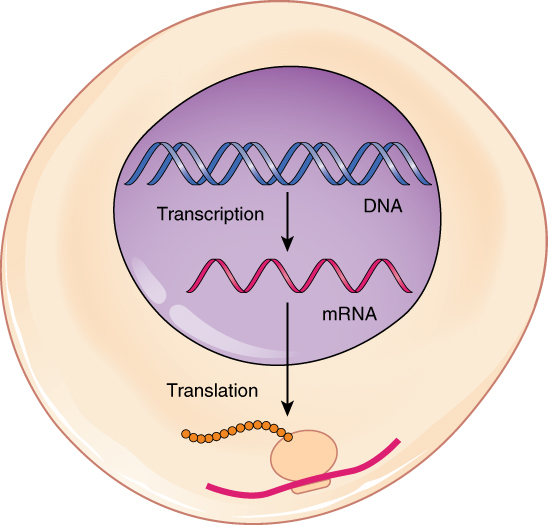 |
| Diagram of protein synthesis https://commons.wikimedia.org/wiki/File:0328_Transcription-translation_Summary.jpg |

The mutations that seemed to have the greatest effect were the frameshift mutations, insertion and deletion, while the mutation that seemed to have the least effect was substitution. For the frameshift mutations, the location of the mutation was also very influential: a mutation near the beginning of the sequence would alter (shift over) almost every codon, while one at the end would change very little. This is due to frameshift mutations affecting every codon after it.
 |
| Some possible mutations in DNA https://en.wikipedia.org/wiki/File:Chromosomes_mutations-en.svg |

I chose the frameshift mutation as what my data indicated would cause the most damage to the gene. This mutation, unlike other mutations we tested, had a chain reaction effect that rippled across and changed the frames of every codon after it. This could lead to devastating consequences, such as a stop codon in the beginning or completely different amino acids. As mentioned earlier, this effect is especially predominant if the mutation is at the beginning, as it would change everything after it.
 |
| Effect of a frameshift mutation (insertion) https://www.flickr.com/photos/yourgenome/26855221022 |
Because of the direct connection between DNA and proteins, and the influence proteins have in the body, dangerous DNA mutations can wreak havoc and create abnormalities in daily processes such as blood flow, digestion, and respiration. For example, cystic fibrosis is caused by a mutation in the CFTR gene. These mutations prevent chloride ion channels from functioning properly, and unusually thick mucus is produced, which clogs airways.
 |
| Diagram of cystic fibrosis https://www.flickr.com/photos/yourgenome/26855222462 |
Monday, December 5, 2016
Human DNA Extraction Lab
In this lab, we asked how DNA can be separated from cheek cells to study. We found that significant amounts of DNA can be extracted as a visible precipitate. The thread-like structure could be seen suspended in the isopropanol alcohol, after the layer of nonpolar alcohol was added on top of the solution with DNA. It has been proven that through homogenization, lysis, and precipitation, one can extract DNA. This is done through breaking down the membranes and nuclear material with polar liquid, lysing the membranes, emulsifying the proteins and lipids, and breaking down the histones in the DNA. Then, by adding a polar substance as a layer, the DNA will fall out of solution at the interface and become a precipitate. Our data supports this claim and is the result of such a process, using salt as a precipation facilitator, detergent as a disruptor, and pineapple juice as a catabolic protease to help break down different structures in the cell and free the DNA.
 |
| DNA precipitates into the ispropanol alcohol |
Some errors people in our lab group made led to alcohol and solution mixing, thus precluding the DNA from becoming a precipitate. In one experiment, the inversion to mix detergent with the solution was done too quickly and violently, thus leading to bubbles forming and disrupting the liquid surface. This would have kept the DNA from successfully precipitating at the interface, and could have mixed up or damaged the DNA strands in the solution. Another error was not measuring very precisely, which lead to a variety of results, some unsuccessful. We simply estimated amounts (e.g. pinch of salt), which may have led to imprecise measurement and thus a failed extraction with a certain substance being too dilute or concentrated. In a future experiment, I would suggest making sure to mix slowly, which would keep the solution from forming many bubbles. Additionally, keeping measurements precise, such as using measuring spoons and graduated cylinders, would give less variation and a higher success rate in general.
 |
| Precipitation is unsuccessful due to violent inversion |
This lab was done to demonstrate how DNA can be extracted from inside the nucleus of a cell. Moreover, I also learned how the membranes, histones, and nuclear material must all be broken down before the DNA can be extracted. This helped me understand how much protection the DNA has, due to it holding the genetic information. Not only does it never leave the nucleus (mRNA copies and leaves instead), there are many layers of membranes to keep it from being damaged by substances outside the cell. Outside of these concepts, based on my experience from this lab, I also now know how one might break down cell membranes to access, not only the DNA, but any organelle one might be studying using the techniques of homogenization, lysis, and precipitation.
Wednesday, November 30, 2016
Coin Sex Lab and Unit 4 Reflection
In the coin sex lab, we simulated the inheritance of traits on different genes through crosses. This effectively models genetic concepts, as the flipping of coins represents the random recombination of alleles, and thus creates plausible results that conform to the combinations found in a punnett square. We tested a cross with sex chromosomes, autosomal inheritance, x-linked inheritance, monohybrid crosses, and a dihybrid cross. Across the board, though our results and ratios did not always completely match the expected results, such a discrepancy can easily be explained by the small sample sizes (10-16 flips), and our results all fit within the possible genotypes from meiosis. Using probability to predict offsprings' traits is limited in that in the real world, as the results often vary from both randomness and environmental traits (here factors that affect the flip result).
 |
| Data for dihybrid cross |
As expected, the X-linked colorblindness cross yielded mostly affected males, and the dihybrid cross yielded different genotypes with more double heterozygous and few double homozygous. In the dihybrid cross, BbEe brown haired, brown eyed individuals were crossed, which is expected to produce 9:3:3:1 phenotypic ratio. Our results produced a 14:1:1:0 ratio, which is close to expected, and this high brown-brown expected value is due to there being more combinations that result in it. Dominant alleles dominate others, so the double dominant genotype would be much more common. This understanding can be directly related to life, as dominant traits are observed much more in the phenotypes than recessive ones, and this can be used to understand how recessive traits such as blue eyes or blond hair are passed down through generations even if masked. This can explain where people around you attained such unique characteristics as the ones they have.
In this unit, we explored concepts like these, such as the cell cycle (interphase, mitosis, cytokinesis), the process of meiosis, how asexual and sexual reproduction each have their costs and benefits, the difference between haploid and diploid cells, Mendel's experiments with pea plants, the principle of inheritance, Mendel's Laws of Segregation and Independent Assortment, genotypes and phenotypes of traits, how dominant alleles mask recessive alleles, the usage of Punnett squares, incomplete dominance and codominance, how genes affect one another through epistasis, and the multiple genes that contribute to polygenic traits.
 |
| Diagram and punnett square of a dihybrid cross |
Some of this material was a bit challenging and confusing to understand, such as the complex probabilities of X-linked traits. However, after practicing and learning about how these alleles are passed along differently in males and females that guarantee certain things, I have grasped a better understanding of it. After lectures and completing the labs and infographic, I could make more connections between the different aspects of genetics, and understood better how Mendel's laws make the principles and complications possible. In addition, I would like to explore some of the more convoluted processes a bit more. For example, how do the spindle fibers in meiosis work? How are they produced and how do they extend and latch onto chromosomes to pull them apart? Also, in DNA replication, how exactly are the strands replicated? Are the leading and lagging strands copied differently due to their direction?
Monday, October 31, 2016
Reproduction: Is sex important?
For a population of organisms to survive, they depend on either sexual or asexual reproduction. Both of these methods have their benefits and costs, and neither is perfect for the survival of the organisms. Sexual reproduction can help spread positive genetic traits and even the dissemination of disease or parasite resistance, as the genes from each parent are naturally selected to benefit the offspring. The nine-banded armadillo benefits from this genetic variety, which helps it become unique and resist disease. However, sexual reproduction takes more time and energy, and competition can be detrimental to the population. Furthermore, asexual reproduction is simple and does not require a mate, but it often results in swift extinction due to clones being genetically identical and vulnerable to the same threats. Philodina utilize asexual reproduction to propagate all over the planet, using anhydrobiosis to travel long distances. This helps overcome vulnerability as a mass, and takes advantage of the benefits of asexual reproduction. Furthermore, the Atta colombica ant travels with disease-free fungus, which helps protect the asexually reproducing fungus gardens against outbreaks of parasites. E. coli can cope with the problems of asexual reproduction by picking up loose DNA from the environment, viruses, animals and dead bacteria.
After reading about these organisms and methods from the article ("Dr. Tatiana's Sex Advice to All Creation"), several questions still remain: how are eggs fertilized? How does asexual reproduction (e.g. binary fission) occur? And how exactly do these mutations occur during meiosis? I look forward to finding some answers in this unit.
After reading about these organisms and methods from the article ("Dr. Tatiana's Sex Advice to All Creation"), several questions still remain: how are eggs fertilized? How does asexual reproduction (e.g. binary fission) occur? And how exactly do these mutations occur during meiosis? I look forward to finding some answers in this unit.
Tuesday, October 25, 2016
Unit 3 Reflection
In this unit, we explored cells and their processes of photosynthesis and cellular respiration. While prokaryotic, autotrophic cells were the original ones, after cyanobacteria evolved, there was enough oxygen for heterotrophs to prosper. According to the endocytotic theory, eukaryotes with different organelles evolved as a result of heterotrophs consuming smaller autotrophs and cyanobacteria through phagocytosis, and the consumed bacteria surviving and living in symbiosis, creating the organelles we see today. These organelles include many membrane-bound structures, including the nucleus, lysosomes, ribosomes, mitochondria, and chloroplasts. The cell membrane has also evolved to be semipermeable and to allow protein-facilitated transport. A similar method of transport--diffusion--plays an important role in the osmosis of water, which not only helps maintain equilibrium, but also makes processes such as photosynthesis and cellular respiration possible.
Photosynthesis uses carbon dioxide, water, and light in a series of light dependent reactions, diffusing the H+ ions from water across the thylakoid, and producing NADPH and ATP to be used in the Calvin cycle. The Calvin cycle produces sugar from carbon dioxide and the molecules formed in the light independent reactions. Cellular respiration does the opposite, breaking down glucose to form ATP for energy storage through glycolysis, the Krebs cycle, and the electron transport chain. This yields 36 ATP in total from 6 glucose and 6 oxygen molecules.
In general, I found understanding the processes of photosynthesis and cellular respiration a big jump from the relatively simple concepts that we covered earlier. In addition, though I found diffusion natural, the complex tonicities of osmosis were confusing when I was first exposed to them. However, after completing several labs and going through the steps of the processes, I found all of these concepts much easier to grasp. The egg diffusion lab helped me understand the impact of hyper- or hypotonic solutions on the movement of water across a membrane, and the photosynthesis virtual lab helped me better correlate each factor of photosynthesis with its rate and output.
I still feel that the cellular processes of energy are extremely complex with details, and I would like to explore the different steps, such as glycolysis and the Calvin cycle, more in depth. This would provide a better understanding of how exactly each molecule is formed and used throughout the process.
 |
| The organelles of a eukaryotic animal cell |
In general, I found understanding the processes of photosynthesis and cellular respiration a big jump from the relatively simple concepts that we covered earlier. In addition, though I found diffusion natural, the complex tonicities of osmosis were confusing when I was first exposed to them. However, after completing several labs and going through the steps of the processes, I found all of these concepts much easier to grasp. The egg diffusion lab helped me understand the impact of hyper- or hypotonic solutions on the movement of water across a membrane, and the photosynthesis virtual lab helped me better correlate each factor of photosynthesis with its rate and output.
 |
| The egg diffusion lab showed the effects of tonicity with a semipermeable membrane |
Wednesday, October 12, 2016
Egg Diffusion Lab
In the egg diffusion lab, we tested how osmosis in different solutions of water would affect the cell. Using eggs to represent cells, we submerged them in corn syrup and deionized water, and recorded the circumference and mass of the eggs before and after the submersion. Overall, the eggs in the sugar water decreased in mass about 46.1%, and decreased in circumference about 22.1%. This was caused by the presence of a hypertonic solution, as the high concentration of solute (sugar) led to water diffusing out of the egg to decrease its mass and circumference.
A cell attempts to maintain equilibrium, and thus water diffuses in or out of the cell when the solute concentration changes due to the solute molecules being to large to diffuse through the cell membrane. For example, when the egg was in the vinegar bath, the tonicity was hypertonic, and thus water left the cell. When the egg was submerged in water, the tonicity was hypotonic, and so water entered the cell. Lastly, putting the egg in sugar water made the tonicity hypertonic again, causing water to diffuse out of the cell once more.
This lab demonstrates the law of diffusion that occurs naturally: substances diffuse from areas of high concentration to low concentration. Also, when solutes are unable to diffuse through a membrane, water instead diffuses in the process of osmosis. The different solutions that the egg was exposed to showed the diffusion of water to maintain equilibrium, including solutions that were hypertonic or hypotonic.
The sprinkling of water on vegetables prevents the diffusion of water out of the vegetables, and even leads to some water diffusing in due to the hypotonic nature. This preserves the "freshness" of the vegetables keeping them hydrated. In addition, the salting of roads to lower the melting point of ice can adversely affect plants nearby to put out water (and shrivel) due to the hypertonic solution of salt in the water.
After this experiment, I would want to further explore the osmosis of water in cells by testing an extremely hypotonic solution. The opposite of the hypertonic solution, I would want to see if cells might swell and possibly pop due to having too low of solute concentration in the solution outside (like water in bloodstream).
 |
| Class data tables for deionized and sugar water |
This lab demonstrates the law of diffusion that occurs naturally: substances diffuse from areas of high concentration to low concentration. Also, when solutes are unable to diffuse through a membrane, water instead diffuses in the process of osmosis. The different solutions that the egg was exposed to showed the diffusion of water to maintain equilibrium, including solutions that were hypertonic or hypotonic.
The sprinkling of water on vegetables prevents the diffusion of water out of the vegetables, and even leads to some water diffusing in due to the hypotonic nature. This preserves the "freshness" of the vegetables keeping them hydrated. In addition, the salting of roads to lower the melting point of ice can adversely affect plants nearby to put out water (and shrivel) due to the hypertonic solution of salt in the water.
After this experiment, I would want to further explore the osmosis of water in cells by testing an extremely hypotonic solution. The opposite of the hypertonic solution, I would want to see if cells might swell and possibly pop due to having too low of solute concentration in the solution outside (like water in bloodstream).
Monday, October 10, 2016
Egg Macromolecules Lab
In the egg macromolecules lab, we asked if monosacchardies are present in the cell nucleus, represented by the egg yolk. We found that they indeed were present in the egg yolk, as a chemical test involving benedicts solution produced a color change from blue to green (rated a 7/10 on our scale compared to the 0/10 of water). This indicated the presence of monosaccharides, in this case glucose, present in the cell nucleus to provide energy, and supports our claim by showing how they can be found in the egg yolk in our experiment.
Furthermore, we also asked if proteins can be found in the egg white, representing the cytoplasm. Here, we found that they were present, and the CuSO4 compound we introduced produced a color change from dark blue to light purple. This was a 9/l0 on our scale, and was supported by the presence of enzymes and structural proteins throughout the cytoplasm. Thus, this supports the claim with proteins.
In addition, we asked whether lipids are present in the egg membrane. We found that lipids are in the cell membrane, as the Sudan III test yielded positive results of a color change from red to brownish orange (7/10). This supports the claim and can be explained by the presence of lipids as phospholipids making up the cell membrane.
While our hypothesis was supported by our data, several errors may have occured and thus skewed the results. For example, we may not have added the correct amount of test substance for each macromolecule test. This potentially incorrect drop amount may have caused the color and scale rating to be lower than the actual amount, due to having less test substance to create a noticeable effect; more care on correct dropper measurement would prevent this. Furthermore, the amount of test sample could have changed our results as well, and made the data lower due to a more diluted exposure to the testing substance. Standardizing this in some way could improve and negate this error; for example, setting a specific measure for each part of the egg, such as a mass measure, could make it more even across tests. These errors may have affected several of the tests, as every group member used a different (estimated) amount of egg membrane, yolk, or white to test.
 |
| Monosaccharide test results (control, egg white, egg yolk, egg membrane from left to right) |
 |
| Protein test results (control, egg white, egg yolk, egg membrane from left to right) |
 |
| Some macromolecule data tables |
Lastly, this lab was done in order to identify macromolecules in different parts of the cell. This taught me the concept of macromolecules being the building blocks behind many of the cell parts and organelles. I learned how glucose can be found in the cell nucleus, how lipids make up the cell membrane as phospholipids, and how structural proteins are found throughout the cell, including in organelles. All in all, based on my experience from this lab, I would also be able to identify the presence of various macromolecules in different types of cells, regardless of their type or origin, even without much knowledge of the cell itself.
Friday, September 23, 2016
Unit 2 Reflection
Unit two encompassed macromolecules such as carbohydrates, lipids, proteins, and nucleic acids, as well as molecular properties. Carbohydrates are saccharides, atoms of carbon, hydrogen, and oxygen formed into rings. Lipids include phospholipids that make up cell membranes, as well as fatty acids in food that can be saturated or unsaturated. Proteins include enzymes, which facilitate the chemical reactions of substrates into products, and structural proteins, which make up different parts of the body. Nucleic acids are composed of nucleotides, which combine at the bases and phosphate groups to form long chains of DNA or RNA, and also include ATP, which is broken down to acquire energy. In addition, polar molecules such as water have properties like cohesion and adhesion, which allow them to be attracted to other molecules of the same or different substance. These properties allow water to be very useful in making solutions, usually as the solvent. Another type of mixture that water is often found in is a suspension, such as blood or cytosol, where undissolved materials fail to settle out. This attraction is called a hydrogen bond, where oppositely charged regions attract; other bonds include ionic bonds, in which atoms gain or lose an electron, and covalent bond, in which electrons are shared.
 |
| Nucleic acids include DNA, or deoxyribonucleic acid |
We also completed a number of different labs in this unit, including the sweetness lab and the cheese lab. These experiments provided further insight into various topics, showing how a higher number of rings leads to less sweet sugar, and how a hot, acidic chymosin solution gave the optimal environment for cheese curdling in milk, respectively. The sweetness lab was mostly a success, aside from a subjective analysis providing slightly contrasting results, but the cheese lab data was skewed by having to clean up early, and some groups not incubating the samples for the full length of time. This led to a somewhat longer curdling time, but the results were still conclusive. In general, however, the labs proved a success in supporting certain concepts and hypotheses and grantng insight, aside from the minor setbacks due to user error.
 |
| The sweetness lab compared the sweetnesses of different saccharides |
All in all, I attained from this unit an abundance of both information and experience, and I look forward to learning more in-depth about the processes and makeup of enzymes and ATP, and finding out the nuances and complex aspects of how our body functions.
Subscribe to:
Posts (Atom)